
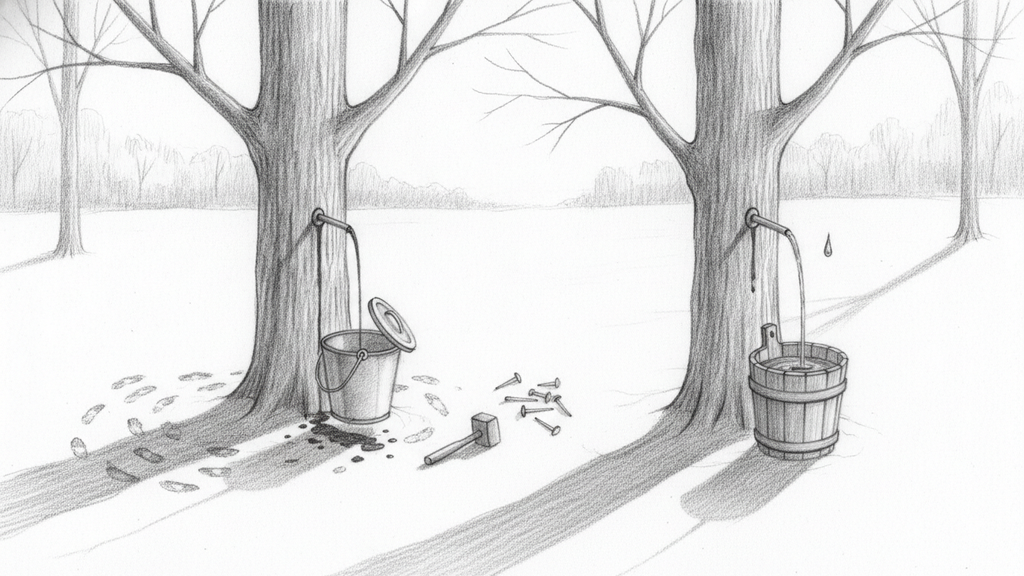
Most companies blame the expert. He has no time. He never replies. He gives three-line answers that cannot be published. So the content plan dies and everyone agrees that experts are just hard to work with.
That diagnosis is wrong. The expert is not the bottleneck. The person asking the questions is.
Two things fail at once. Subject-matter experts do not have time to sit and formulate good answers, and the people interviewing them have no idea what to ask or how to ask it. They are not professional interviewers. They were never trained to be. In most companies, the person holding the microphone is whoever was available.
Knowledge extraction starts with consent, not with a questionnaire
Before anything gets extracted, the expert has to agree to share. That decision is made in the first few minutes of the first conversation, and it turns almost entirely on who is asking. A good interviewer with domain understanding gets a real answer. Someone reading a generic list of prompts gets politeness and nothing else.
This is why outsourcing the interview to a marketing agency usually fails. It starts from the wrong place and ends the way you would expect. The expert sits down, hears the first three questions, concludes that his time is being wasted on stupid questions, and gives the minimum. Bad input, bad output. Nobody in the chain is lying or lazy. The design was broken before the call started.
So you end up with the situation most firms are actually in. There is nobody inside the company who can reliably ask good questions, and nobody outside it either. The knowledge extraction everyone planned for simply never happens. The expertise stays in people’s heads while easier-to-find competitors get chosen instead.
Spinoza’s point, applied to interviews
There is an idea attributed to Spinoza that if you know why, the how does not matter. He meant knowing why you live. It transfers surprisingly well to interview design.
Most interviews have no why. They have a topic. Someone decided the company should publish something about, say, procurement risk, and the questions follow from the topic. That produces answers with no direction, because nothing in the conversation is pulling toward a purpose.
Hold the goal instead. The goal is publishing content that speaks to a specific ideal customer profile, demonstrates the expert’s real expertise, and builds a brand with a voice that sounds like nobody else in the industry. Once that goal is fixed and explicit, it starts deciding things for you. It tells you which questions are worth asking and which are filler. It tells you when an answer is thin and needs a follow-up rather than padding.
I would put the weight of knowing why at roughly 70% of the success of an interview. I should be honest that this is a judgment, not a measurement. I have no study behind the number. But the direction is not in doubt: purpose does more work than technique.
Why, what and how
The why alone is not enough. Question quality comes from three things together.
Why. The end goal of the publishing effort, held constantly, including who the content is for.
What. Context. What the company actually does, who its customers are, and what this specific expert knows that nobody else in the building knows. Without this you get questions that could be asked of any consultant in any sector.
How. The individual expert’s preferences. Some people want a sharp provocation to react to. Some want a broad opening and room to think out loud. Some answer better in voice than in text. Some need a specific way of opening and closing the conversation before they relax.
The how is where the compounding happens. Every interview loop teaches something about how that particular person likes to be interviewed: question style, the kind of answers he gives most readily, what opens him up and what shuts him down. The next loop uses it. Over a few weeks the interview stops being a standard format applied to a person and becomes a format shaped around that person.
Combining the three is the differentiator. Not better prompts. Not more questions.
The test is whether the expert enjoys it
Here is the standard I would hold any knowledge extraction system to. After a month, does the expert look forward to the session?
That sounds soft. It is actually the hardest metric in the whole process, because it can only be met by getting the mechanics right. The session has to be fast, short and sharp. It has to cover only what this person genuinely should answer, and nothing that someone else in the firm could have answered better. When that is true, the feeling of wasted time disappears, and with it the reason experts quietly stop replying.
When it is not true, no amount of process discipline saves you. You can schedule the calls, chase the calendar invites, escalate to the founder. The expert will keep giving you three lines, because three lines is a rational response to bad questions.
So if your content programme stalled, do not start by rebuilding the editorial calendar. Look at the last five interviews and ask what the purpose of each one was. If the honest answer is “we needed a post,” you have found the problem, and it was never the expert’s diary.